Neuropathy affects over 20 million Americans. Patients often experience numbness and pain in their feet (and sometimes their hands). When they visit their doctor or healthcare provider, they are often told that the condition is irreversible.
This is not true.
Neuropathy and nerve function can be improved through various methods. Today, I'll discuss one that doesn't require a doctor's visit or a lot of money: exercise.
Before explaining how exercise can help reverse and treat neuropathy, it's probably helpful to first clarify what this condition is. When medical professionals use the term neuropathy, they usually refer to a condition where the endings of small nerves in the body are damaged. Sometimes the nerves just don't work well. Sometimes, they die back.
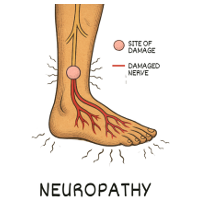
Nerve function (and malfunction) can be assessed through several techniques. Sensation can be tested with thin filaments that become less perceptible on the skin when nerve function declines. Nerves can also be evaluated by sending an electric pulse along the nerve and measuring nerve conduction velocity. Nerve conduction slows or even stops with nerve damage. Neuropathy can also be diagnosed by counting the number of small nerves in a skin sample. This is performed by taking a skin biopsy (often of the leg or foot), staining the nerves, and then counting them under a microscope. Nerve counts, or "nerve fiber density," will decrease as neuropathy worsens.
There are many causes of neuropathy. People with diabetes often experience numbness and pain related to this condition. Those who have undergone chemotherapy frequently develop neuropathy as well, along with individuals with fibromyalgia, chronic viral infections, or thyroid disease. The most common cause of neuropathy is called "idiopathic," which means it's not linked to a known common disease. Whether the cause is known or not, most people with neuropathy experience a loss of functioning mitochondria and energy supply to the nerves. In a future blog, I'll explain in more detail the crucial role of mitochondria for nerve health.
Exercise has been shown to benefit individuals with neuropathy in several studies. One study of people with diabetes found that 8 weeks of moderate walking improved sensation in their feet. In another study, individuals with diabetes were divided into a "standard care" group and an exercise group. Their nerve function was assessed by measuring nerve conduction velocities. Not only were the exercisers protected from nerve damage, but many actually experienced improved nerve function over time. Additionally, exercise has been shown to improve nerve fiber density and reduce pain in those with diabetic neuropathy. Exercise can protect nerves from damage.
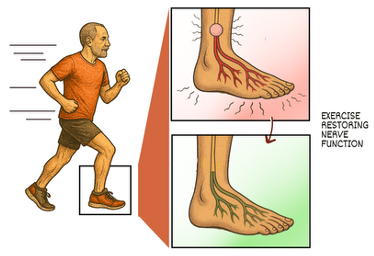
Exercise can restore nerve health. In the next blog, I'll discuss another method that can provide nerve health benefits: laser therapy.