Treat meniscus pain and protect your knee from arthritis with regenerative therapies. Research shows surgery for degenerative meniscus tears may actually accelerate arthritis. Discover better alternatives.
In addition to the hard cartilage that covers joint surfaces (called hyaline cartilage), your knee also contains softer fibrocartilage rings called the meniscus. You have two menisci in each knee-one on the inside (medial) and one on the outside (lateral).
The meniscus has a critical function: to stabilize and cushion your knee joint through all its motions. It acts as a shock absorber between your thigh bone (femur) and shin bone (tibia), distributing weight and reducing stress on the joint cartilage.
Tears in the meniscus are extremely common. Some occur in young athletes from acute injuries and can be quite painful. Others develop gradually in joints with osteoarthritis, where the same enzymes that cause OA also break down the fibrocartilage over time.
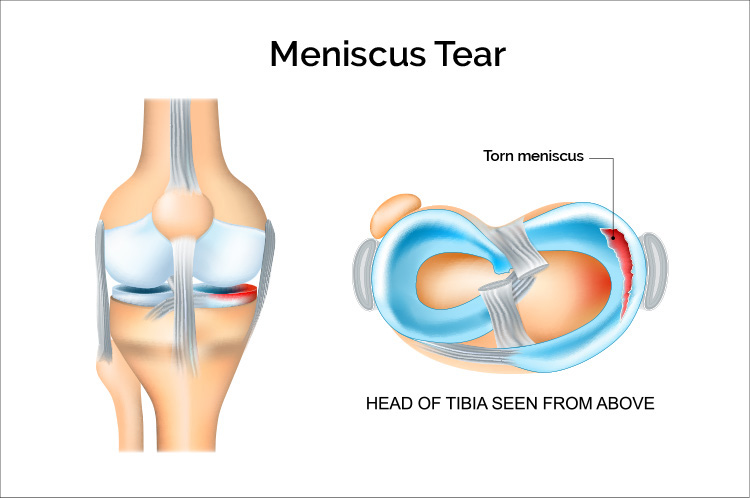
The meniscus sits on top of the tibia, cushioning the knee joint
Research has fundamentally changed how we approach meniscus tears
In the past, surgeons routinely removed the damaged meniscus (a procedure called a meniscectomy) when it was torn. However, this surgery has now been shown to accelerate the development of osteoarthritis, and it is performed much less frequently today.
A meniscus tear can lead to a cytokine imbalance and an increased risk of developing osteoarthritis in subsequent years. Early treatment is essential to prevent long-term joint damage.
The most important treatment to maintain joint health after a meniscus tear combines exercise with regenerative therapies.
The Foundation of Treatment
The most important treatment to maintain joint health after a meniscus tear is an exercise and strength-building program. Improvements in strength restore stability to a joint that has lost some of its support structure.
Building thigh muscles provides essential support for the knee joint
Proprioceptive exercises improve joint awareness and control
Swimming, cycling, and walking maintain fitness without stress
Reset the Joint Environment
Regenerative therapies are a valuable tool for resetting immune cells and the cytokine balance of the joint, reducing inflammation and promoting natural healing.
Concentrated platelets from your own blood deliver growth factors directly to the injured meniscus.
Learn about PRPAdvanced treatment that rebalances cytokines and creates a healing environment in the joint.
Learn about RegenokineBlood protein concentrates capture and neutralize the enzymes that break down cartilage and meniscus tissue.
Learn about Blood Protein Concentrate TherapyCommon symptoms that may indicate you have a torn meniscus
Especially when twisting or rotating the knee, often along the joint line
Knee swelling that develops gradually over 24-48 hours after injury
Catching or locking sensation, feeling like your knee is stuck
Feeling that your knee might give way, especially when pivoting
Common questions about meniscus tears and treatment options
Schedule a consultation to learn how regenerative medicine can help you recover from a meniscus tear and prevent future arthritis.
