Advanced regenerative therapies that address the root cause of joint pain-not just the symptoms. Discover how we can help you regain mobility and reduce pain without surgery.
Affects over 32 million adults in the US
Regenerative therapies can delay or avoid surgery
Best results in Stages I-III before bone-on-bone
Osteoarthritis (OA) is one of the most common painful conditions in the United States and around the world. For decades, it was considered simply a "wear and tear" disease-an inevitable consequence of aging joints. However, modern research has revealed a much more complex picture.
We now understand that OA results from an imbalance between inflammatory and inflammation-resolving cytokines (immune proteins) within the joint. When this balance tips toward inflammation, the joint environment becomes hostile to cartilage, triggering enzymes that progressively break down this protective tissue.
This inflammatory imbalance can develop after an injury-such as an ACL tear or meniscus damage-or can result from chronic systemic inflammation associated with conditions like diabetes or metabolic syndrome. Understanding this mechanism is key to effective treatment.
Inflammatory cytokines like IL-1β and TNF-α stimulate production of matrix metalloproteinases (MMPs)-enzymes that literally digest cartilage. This is why simply masking pain with medications doesn't address the underlying problem.
Understanding where you are in the progression of OA helps determine the most effective treatment approach. Although a cushion between the bones may still be seen on X-ray in early stages of OA, immune imbalance and cartilage destruction may be ongoing. Regenerative therapies are often most effective in these earlier stages before cartilage loss is too severe.
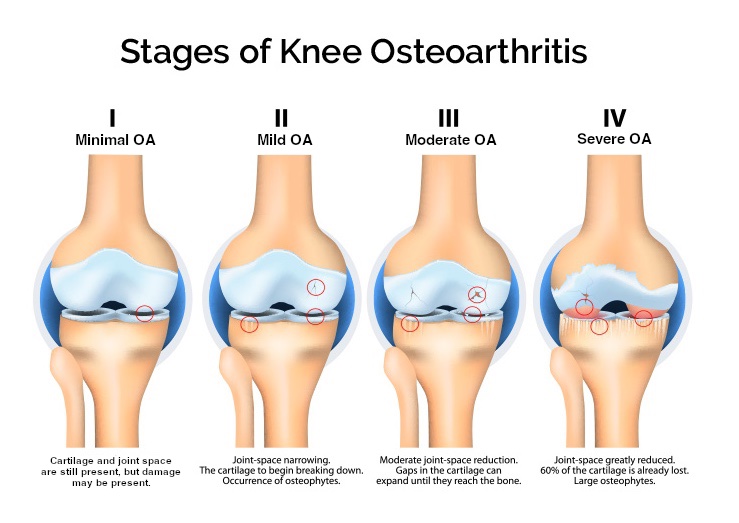
There may be a slight loss of cartilage on X-ray with minor bone spurs. Often no symptoms or occasional mild stiffness.
Joint space visibly narrows as cartilage breaks down. Osteophytes (bone spurs) appear on imaging. Pain typically occurs after extended activity.
Moderate joint space reduction with gaps in cartilage that may extend to bone. Frequent pain during normal activities, morning stiffness, and possible swelling.
Significant cartilage loss. Bone-on-bone contact causes significant pain, large osteophytes, and major functional limitation.
Don't know your stage? We can help determine your OA severity through imaging and clinical evaluation.
Request AppointmentTraditional treatments for osteoarthritis pain focus on symptom relief rather than addressing the underlying cause. While they may provide temporary comfort, they can shut down our built-in healing mechanisms.
Reduce pain temporarily by shutting down immune pathways. Long-term use carries risks including GI bleeding, kidney problems, and cardiovascular issues. NSAIDs can impair our body’s natural healing mechanisms.
Provide short-term relief but research shows repeated injections can actually accelerate cartilage damage and worsen OA progression over time. Steroids can impair our body’s natural healing mechanisms.
May improve joint lubrication temporarily. Not recommended by the American Association of Orthopedic Surgeons or the American College of Rheumatology.
Successfully treating osteoarthritis requires rebalancing cytokines and the immune system. Our regenerative therapies work with your body's natural healing mechanisms to:
We offer multiple regenerative approaches, customized based on your specific condition, stage of OA, and treatment goals.
Concentrated healing factors from your own blood, delivered directly to the affected joint to turn on immune-based healing mechanisms, reduce pain, and support repair.
Learn MoreA multimodal program that uses autologous conditioned serum (ACS) and other factors to resolve inflammation, restore tissue health, and reduce the drivers of OA. One of the few US providers.
Learn MoreBlood protein concentrates capture and neutralize the destructive enzymes (MMPs) that break down cartilage in osteoarthritic joints.
Learn MoreCommon questions about osteoarthritis and regenerative treatment options.
Osteoarthritis results from an imbalance between inflammatory and inflammation-resolving proteins (cytokines) in the joint. This can occur after injuries like ACL or meniscus tears, or from chronic inflammation related to conditions like diabetes. This process produces enzymes that break down cartilage over time.
While steroid injections can temporarily relieve pain, they don't correct the underlying cytokine imbalance causing osteoarthritis. Steroids can impair our body’s natural healing mechanisms.Research has shown that repeated steroid injections may actually accelerate cartilage damage and worsen the condition over time.
Regenerative therapies work best before osteoarthritis becomes advanced. Stages I through III typically respond well to treatment. Stage IV (bone-on-bone) osteoarthritis may have limited response to regenerative approaches, making early intervention important.
Regenerative medicine aims to rebalance the immune system and cytokines in the joint, addressing the root cause rather than just masking symptoms. Treatments like PRP and the Regenokine® Program use your body's own healing factors to resolve inflammation and support tissue repair.
While cartilage damage cannot be fully reversed, regenerative treatments can slow progression, resolve inflammation, relieve pain, and improve joint function. Early intervention offers the best opportunity to preserve remaining cartilage and delay or avoid joint replacement surgery
Ideal candidates for regenerative therapies are individuals with mild to moderate osteoarthritis (Stages I-III) who haven't found lasting relief from exercise and physical therapy programs. People with advanced OA (Grade IV) may also be candidates, depending on circumstances. A thorough evaluation helps determine the most appropriate treatment approach for your specific condition
Early intervention with regenerative therapy can help preserve your joint function and quality of life. Schedule a consultation to learn if you're a candidate.
