Pain on the outside of the hip is common—and frequently misunderstood.
What is a bursa?
A bursa is a small, fluid-filled sac that reduces friction where muscles, tendons, and other tissues move over bone or pressure points. The body contains many bursae. Those around the shoulder, knee, and especially outside of the hip are more likely to become painful.

The bursa on the outside of the hip gets its name from the nearby bone, the trochanter. This bony bump isn’t actually part of the hip’s ball-and-socket joint. However, the tendons that insert here play a critically important role in stabilizing the hip joint throughout its movements.
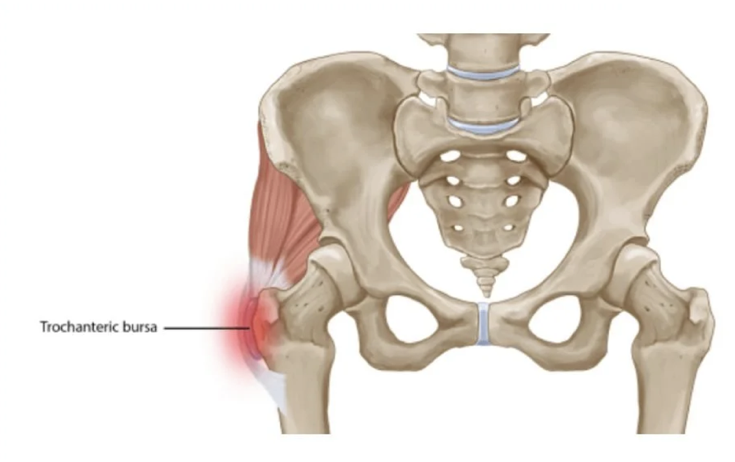
These tendons (the gluteus medius and minimus, specifically) run under the bursa, just like the rotator cuff tendons run under the shoulder bursa. If the tendons develop small tears, they can become painful. They can also inflame the overlying bursa. That means that if you have pain on the outside of your hip, the problem probably started with the tendons.
The pain can be debilitating. You might not even be able to sleep on your side at night. If you saw your practitioner, you probably received a diagnosis of bursitis and were treated with anti-inflammatory medications or a steroid injection into the area. These injections are often quite effective—at least for a few weeks. Unfortunately, the pain often returns because bursitis isn’t the cause. The problem is the unhealthy tendons below the bursa. A repeat steroid injection may help again for a while. However, repeat steroid injections can weaken the tendons and have even been associated with tendon rupture.
This distinction between bursitis and tendon injuries wasn’t clear until we began examining the lateral hip with ultrasound. Ultrasound allows us to clearly differentiate between the
bursa and the tendon and determine whether one or both are problematic. It also helps us tailor treatments and avoid overuse of steroid injections. This new understanding is reflected in a new name for lateral hip pain. Many musculoskeletal clinicians now call it “greater trochanter pain syndrome.” This name reflects that symptoms can be caused by the tendon, the bursa, or both.
Treating the cause
Long-term healing of the tendons and resolution of bursitis (if present) begin with gentle, progressive loading to strengthen them. A physical therapist or knowledgeable trainer can help develop a program to strengthen these structures while limiting activities and positions that compress the painful tendons.
Some people continue to experience pain despite a well-designed exercise program. For these individuals, platelet-rich plasma (PRP) may be a valuable option. PRP concentrates platelets and their growth factors, which promote tendon healing and reduce inflammation. Clinical studies show that PRP provides longer-lasting improvement than corticosteroid injections for patients with lateral hip pain.
The bottom line
If you have pain on the outside of your hip, begin with a thorough evaluation and a progressive strengthening program. If symptoms persist, consult a clinician experienced in musculoskeletal ultrasound to assess tendon health and determine whether PRP or other orthobiologic therapies may be appropriate.
“Bursitis” pain resolves when the tendon health is restored.